 S Panchanathan Stores
In this article4 parts
Quick answer
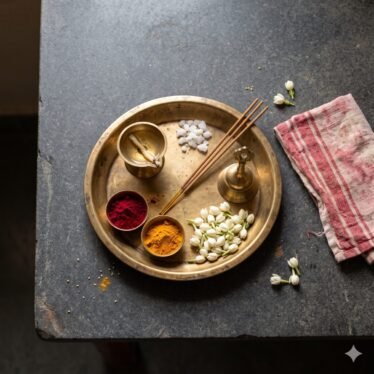
For everyday pooja at home you need a lamp with oil or ghee and cotton wicks, camphor, agarbatti or sambrani, kumkum, turmeric, sandal paste, flowers, a little fruit or sugar to offer, a bell and a matchbox.
- One pack of 60 wicks lasts about a month at two wicks a day.
- Families follow different customs; this is a simple everyday list, not a rule.
- Monthly cost is roughly ₹300 to ₹500 without flowers (our estimate).
What are the 12 basics?
Daily pooja basicsFor one month · 4 of 12 on our site
- Lamp (vilakku)brass or clay, one-timeIn the shop
- Gingelly oil or gheeabout 500 ml a monthIn the shop
- Camphor (karpooram)1 small packIn the shop
- Kumkum1 small boxIn the shop
- Turmeric (manjal)1 small packIn the shop
- Flowersfresh each day
- Fruit, sugar or kalkandu to offera little each dayIn the shop
- Bell and matchboxone-timeIn the shop
How much does daily pooja cost a month?
₹150–250lamp oil or ghee
₹10cotton wicks, 60
₹100–200agarbatti, sambrani, camphor, kumkum, sandal
₹300–500a month in all, without flowers (our estimate)
A simple morning routine
- After bathClean the lamp
Wipe yesterday's soot and old wick, add fresh oil and a new wick.
- LightLight the lamp
Light the lamp and an agarbatti.
- OfferFlowers and kumkum
Offer flowers, apply kumkum and sandal, and place a little fruit or sugar.
- FinishCamphor aarti
Light camphor on a plate, show the aarti, and ring the bell.
Shop tip
Keep the camphor and matchbox in a closed tin, high up, away from children. Camphor is harmful if swallowed.
Not sure what the difference is between camphor, agarbatti and sambrani? Read camphor, agarbatti and sambrani explained.
Questions people ask
Which oil is best for the daily lamp?
Gingelly oil is the most common for everyday lamps; many homes use ghee on special days or for the pooja room lamp.
How often should I clean the lamp?
Wipe it every day and give it a full wash with tamarind or lemon once a week to keep the brass bright.
Can I do pooja without camphor?
Yes. Customs vary; a lamp and an agarbatti are enough for a simple daily prayer in many homes.
Buy for this article
From our shelves · delivered today in Kallakurichi, courier across South India