 S Panchanathan Stores
In this article6 parts
Quick answer
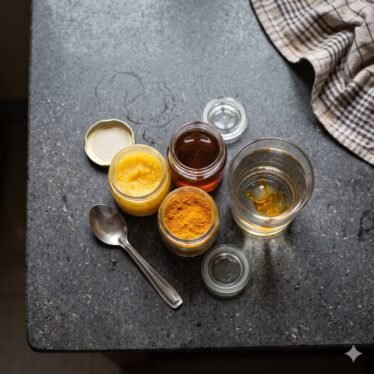
You can spot some common adulteration at home with a glass of water, a spoon and a few minutes. FSSAI publishes these quick checks in its DART guide (Detect Adulteration with Rapid Test).
- Turmeric: pure powder settles in water and leaves the water only lightly yellow.
- Honey: a drop of pure honey stays together in a glass of water.
- Ghee: a few drops of iodine turn blue if starch or mashed potato has been added.
Home tests catch only some kinds of adulteration, and a “pass” is not a lab certificate. They are a good first check before you buy a new brand or a loose product.
What do you need?
1 glassof clear water
Iodinetincture from a chemist, for the ghee test
5 minfor all three tests
How do you test turmeric powder?
- Step 1Add to water
Put a teaspoon of turmeric powder into a glass of water. Do not stir.
- Step 2Wait 5 minutes
Let it settle.
- Step 3Look
Pure turmeric settles at the bottom and leaves the water light yellow. Water that turns strongly yellow suggests added colour.
How do you test honey?
Likely purea drop in water
or- The drop sinks and stays as a lump
- It dissolves only when stirred
Check furthera drop in water
- It spreads and dissolves at once
- This can mean sugar syrup was added
Crystals are not a fault
Pure honey often thickens and forms crystals in cold weather. Stand the bottle in warm water and it turns liquid again. Crystals alone do not mean the honey is fake.
How do you test ghee?
- Step 1Melt a little
Melt half a teaspoon of ghee in a small steel bowl and let it cool slightly.
- Step 2Add iodine
Add two or three drops of tincture of iodine.
- Step 3Look
If it turns blue, starch such as mashed potato has been mixed in. Pure ghee shows no blue.
The iodine test finds starch only. Ghee mixed with cheaper oils or fats needs a lab test.
When is a home test not enough?
Good to know
- Buy packed products with an FSSAI licence number
- Check the pack date and seal
- Try a new brand in a small pack first
Home tests cannot
- Find added oils or fats in ghee
- Find chemical colours like metanil yellow without lab chemicals
- Prove a product is safe
If you suspect adulteration, keep the pack and the bill, and report it through FSSAI’s Food Safety Connect app or the National Consumer Helpline on 1915. If you bought it from us, tell us here.
Questions people ask
Where do these tests come from?
From FSSAI’s DART book (Detect Adulteration with Rapid Test), a free guide of simple household checks published by the Food Safety and Standards Authority of India.
Is the honey burning test reliable?
It is often shared but not reliable at home; moisture and the wick change the result. The water test is simpler.
Does dark ghee mean it is pure?
No. Colour depends on the milk and how long it was heated. Smell and the tests above say more than colour.